
Smarter staffing.
Better care.
Remedi predicts staffing gaps before they happen and fills shifts from your own team first — so care keeps moving and costs stay down.
- Predict gaps early
- Use internal staff first
- Reduce agency spend
We’re looking for the right Lighthouse Partners. A partnership for the long term: we build Remedi together on your floors, and you keep a partner discount for life.
How the program works →Remedi is built on decades of workforce science from healthcare.
From inside the nation’s largest health systems, for hospitals and post-acute care, every shift of every day.
Forecast
Flu season, school calendars and a storm on Wednesday show up in the numbers days before the first call-out. Remedi reads them and adjusts the roster as the week moves, so gaps close while there is still time.
Own staff
Float, per-diem and part-time staff get the open shift first, in an order they can see. When agency is the only answer, its cost goes on the record.
The ledger
Everyone can see where they stand on weekends, nights, holidays and overtime. A schedule they can check is a big part of why people pick up open shifts and stay.
What changes on your floors.
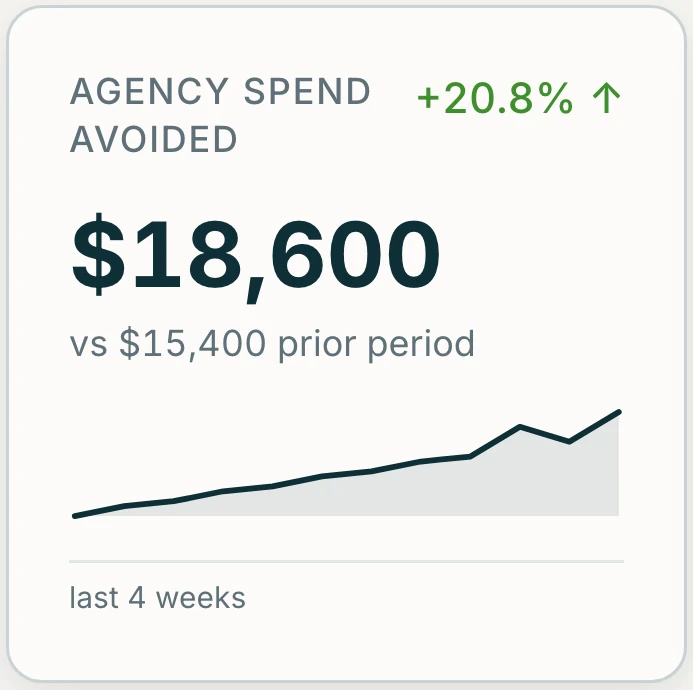
We only win when you do. Remedi pays off when your agency spend falls and your people stay.
Your own staff first
More shifts covered by the staff you already employ, and what each covered gap cost.
Matched to your plan
Short-staffed less, and overstaffed less, against the plan you set.
A schedule they trust
Requests honored, the posted schedule left alone, every decision explained.
Manager hours back
Less time building schedules and working the phones at five in the morning.
Safe limits
Rest, hours and credentials checked before anyone is scheduled. Fatigue flagged early.
Every result is measured in your own building.
See it on your own floors.
Lighthouse Partners see Remedi on their own units, with their own numbers, before they commit to anything.
Become a Lighthouse Partner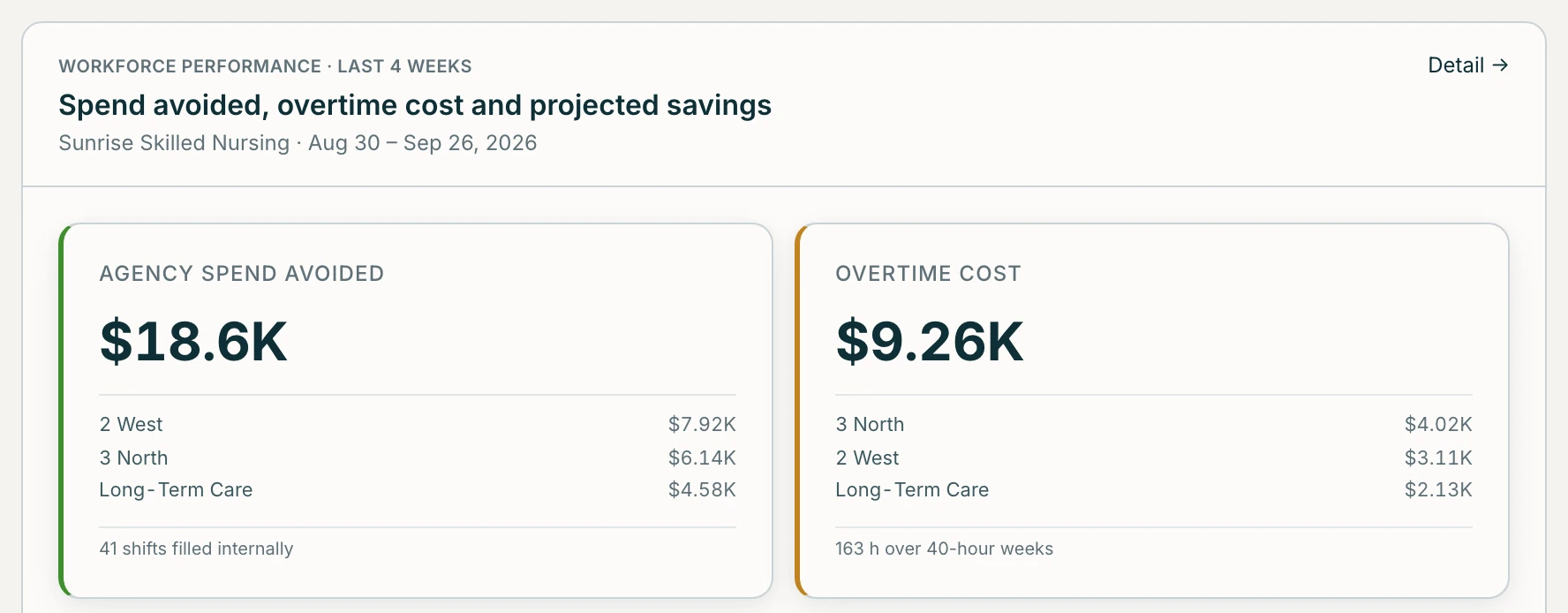
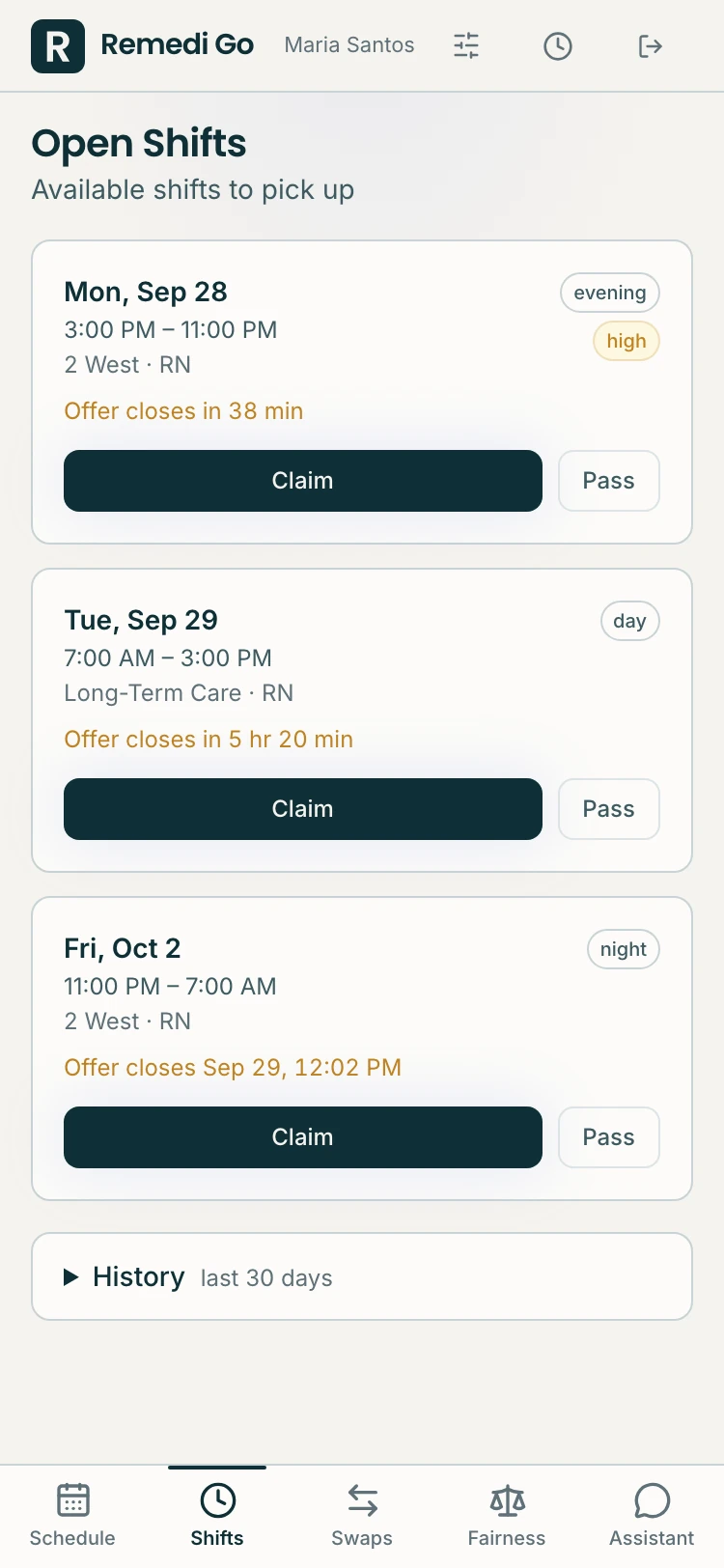
Managers see the gaps coming, and nurses see the shifts they can pick up.
The manager works in the web app, and every nurse carries Remedi Go on their phone. Both show the same week.
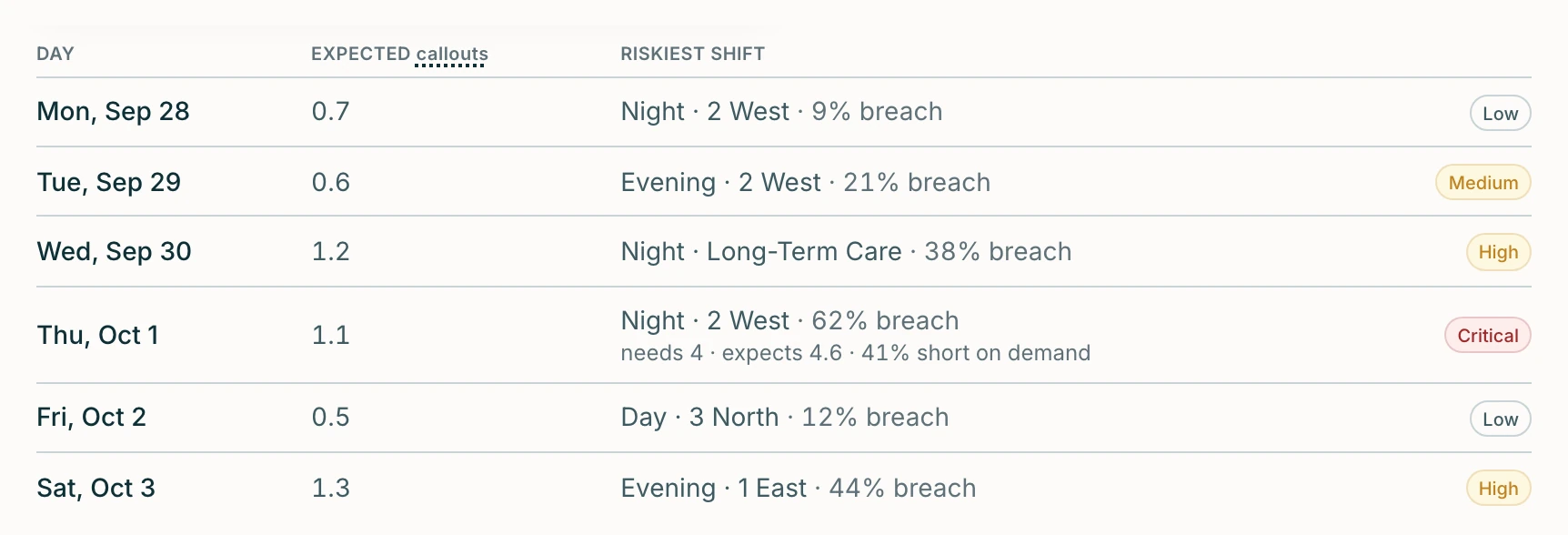
Most staffing gaps show up days ahead, and many still go to an agency.
When a gap arrives anyway, an agency nurse often fills it at 1.5 to 2.5 times what your own staff cost, and often without knowing your patients.
Agency cost: CEPR, 2022
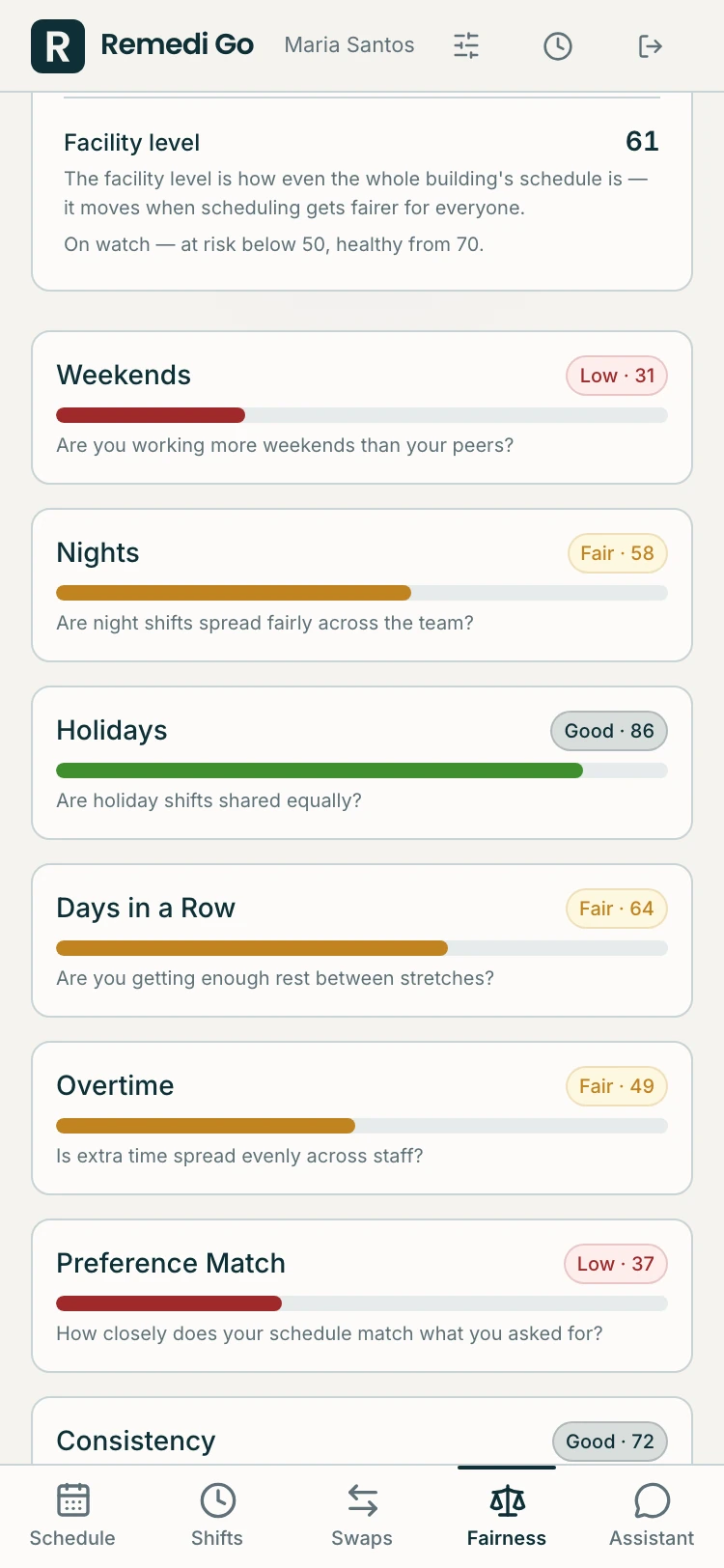
The patients still need care, so every gap lands on whoever is on the unit. Shift after shift, the same people cover the overtime, and requests go unanswered.
of nurses who leave their jobs name burnout as a reason. Burnout often starts with the schedule.
Remedi catches the gap before the first call-out.
A storm is tracking in by Wednesday morning. The shift lead approved a change to the morning crew for staff with long commutes, and cover is lined up before the first call-out.
At 2 a.m. a nurse called out. Remedi offered the shift to a nurse with the same skills who knows the patient, and the shift lead approved it.
The fairness ledger shows three Med-Surg nurses carrying more than their share of nights and weekends for four straight weeks. Remedi drafts a rebalanced schedule, and the director of nursing approves it.
Remedi follows every open shift from the call-out to the timecard.
Follow one call-out on 2 West through the screens your managers use.
-
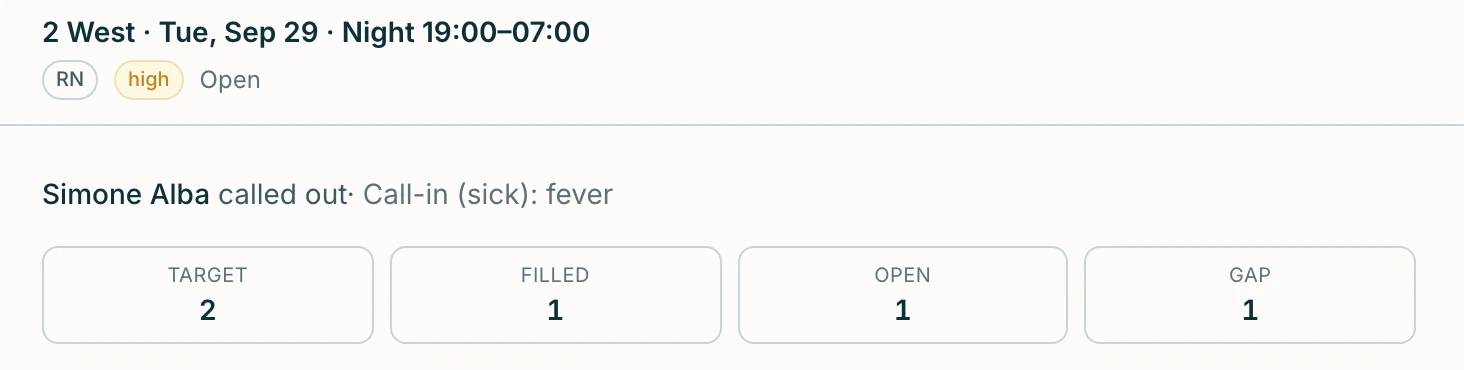
A nurse calls out sick for Tuesday night on 2 West. Remedi shows the gap and offers the shift to your own staff in the order the fairness ledger sets.
-
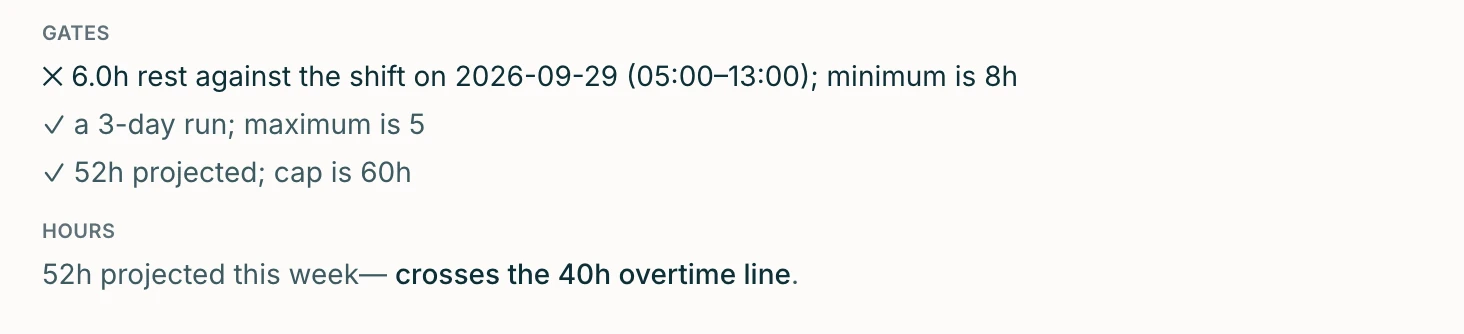
When a manager assigns a nurse directly, rest, days in a row and weekly hours are checked first. Here the rest period falls two hours short of the minimum, and the check flags it.
-
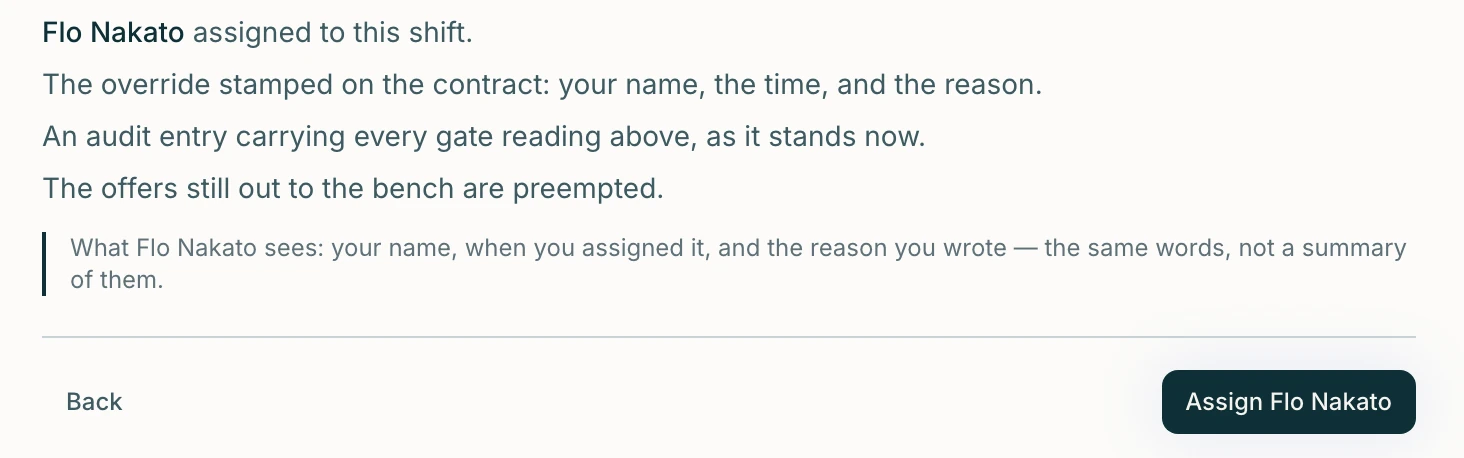
The assignment goes on the record with the manager’s name, the time and the reason. The nurse sees the same words the manager wrote.
-
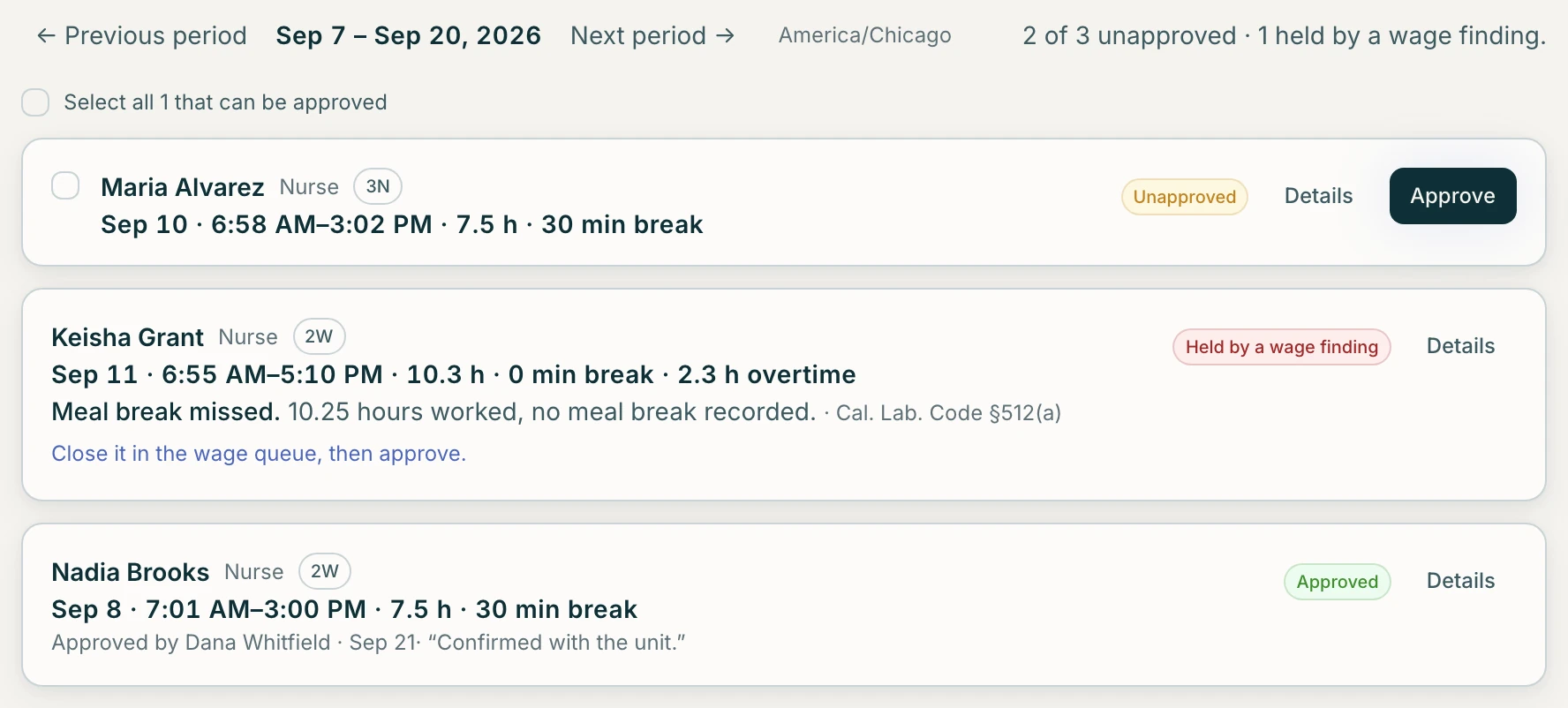
After the shift, the hours reach the timecard. A card with a missed meal break waits until someone resolves the finding.
A fair schedule is why people pick up the open shift.
Nights, weekends and holidays are shared evenly across the team, and every nurse can open the fairness ledger to see how. Staff who trust the schedule pick up open shifts, so fewer of them go to an agency.
Remedi fits the team and the systems you already have.
Who it’s for
- Hospitals
- Each unit is staffed for the census you expect tomorrow.
- Skilled nursing and post-acute
- Gaps are filled from your own staff, at your own rates.
- Rural and critical-access
- Our team sets up Remedi and supports it, so you hire no one to manage it.
Your team makes every call
Remedi forecasts the gap and proposes the fill. A charge nurse or manager approves each one, and every action is logged with its reason so your team can reverse it.
See how approvals workYour systems stay where they are
Remedi works with the EHR, HR and payroll systems you already have. The standalone scheduling tools, portals and dashboards around them go, and so do their invoices.
See how Remedi connectsThe research with Middle Tennessee State University
Middle Tennessee State University is studying whether explained schedules feel fairer to nurses.
Research partners help shape what gets measured, and the findings get published either way.
Built on infrastructure your IT team already knows.
See how Remedi is built- Google Cloud
- Anthropic
- Restate
- Cloudflare
- PostgreSQL
- HIPAA
- Business associate; we sign a BAA
- SOC 2
- Type 1 audit in progress
- Hosting
- Our cloud, your cloud or your own servers

To evolve how healthcare works — so better care costs less and reaches more people.
We’re looking for the right Lighthouse Partners.
This isn’t a trial. It’s a partnership for the long term: we build Remedi with you on your own floors, your staff use it free for a year, and you keep a partner discount for life.